
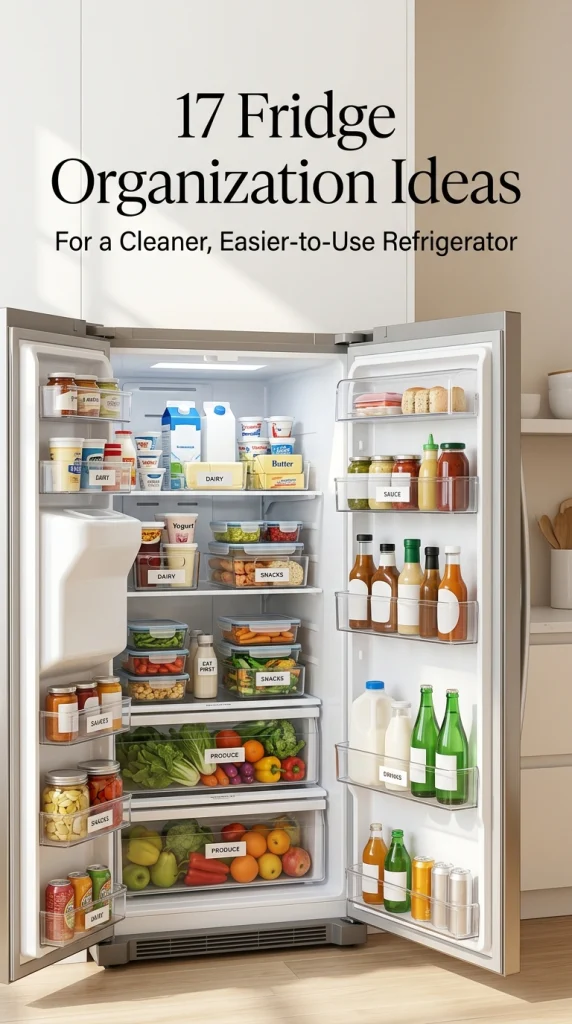
A cluttered refrigerator can make everyday meals feel harder than they need to be. Food gets pushed to the back, leftovers are forgotten, shelves become crowded, and finding one small item can turn into a full refrigerator search.
The good news is that you don’t need a huge refrigerator or an expensive collection of containers to create a more organized space. A few simple changes can make your fridge easier to see, clean, and maintain.
These fridge organization ideas focus on practical food storage, easy access, and a cleaner-looking refrigerator. Whether you have a compact apartment fridge or a large family refrigerator, you can adapt these ideas to fit your space.
1. Start With a Complete Fridge Cleanout
Before organizing anything, take everything out of the refrigerator.
Check expiration dates, discard food that is no longer safe to eat, and wipe down shelves and drawers. Removing everything gives you a clear view of the space you actually have.
As you clean, group similar foods together on the counter, such as:
- Dairy products
- Condiments and sauces
- Fruits
- Vegetables
- Drinks
- Leftovers
- Breakfast foods
- Snacks
This makes the next organization step much easier.
2. Use Clear Fridge Bins for Small Items
Clear bins are one of the simplest ways to make a refrigerator easier to use.
Instead of allowing small packages and jars to spread across a shelf, place similar items together in a bin. Because the containers are clear, you can see what’s inside without constantly pulling everything out.
Try separate bins for:
- Yogurt and small dairy products
- Kids’ snacks
- Breakfast foods
- Cheese
- Sauces
- Grab-and-go items
Choose bins that fit your shelf dimensions rather than buying them first and hoping they work.
3. Create a Dedicated Leftovers Zone
Leftovers are much easier to remember when they have a designated location.
Choose one shelf or section for cooked food and leftovers. Store food in appropriately sized, covered containers and place newer items behind older ones when practical.
A simple “eat first” bin can also help. Put foods that need to be used soon in one clearly visible container.
This turns refrigerator organization into a simple visual reminder rather than relying entirely on memory.
4. Organize by Food Category
Instead of placing food wherever there happens to be room, give each category a consistent home.
For example:
- Top shelf: ready-to-eat foods and leftovers
- Middle shelf: dairy and everyday foods
- Lower shelf: larger containers
- Drawers: produce
- Door shelves: condiments and other suitable items
The exact arrangement can vary depending on your refrigerator design and manufacturer’s recommendations. The important part is consistency.
When every category has a home, putting groceries away becomes much faster.
5. Make a Grab-and-Go Breakfast Bin
If mornings are busy, create a small breakfast section.
A clear bin can hold items such as yogurt, cheese portions, prepared breakfast ingredients, or other foods your household regularly reaches for in the morning.
The goal isn’t to cram everything into one container. Instead, create a convenient group of frequently used items so you don’t have to search through several shelves.
6. Give Condiments Their Own Section
Condiment bottles can quickly make a refrigerator door look chaotic.
Group ketchup, mustard, salad dressings, sauces, and similar bottles together. A narrow bin can keep bottles upright and prevent smaller containers from getting lost behind larger ones.
Before buying additional organizers, check how many bottles you actually use. Organization works better when it reflects your real shopping habits.
7. Use a Lazy Susan for Frequently Used Jars
A turntable can make deep refrigerator shelves easier to access.
Place frequently used jars or bottles on it, particularly items that would otherwise disappear behind other containers. When you need something, rotate the turntable instead of moving several bottles.
This can be especially useful for smaller jars and containers that are easy to overlook.
8. Store Produce So You Can See It
Produce is much easier to use when you can see what you have.
Avoid overfilling produce drawers. Keep similar items together and arrange frequently used produce where it is easy to reach.
For items that are appropriate to store outside the crisper drawer, a visible container can make them easier to remember during meal preparation.
Follow the storage guidance for individual fruits and vegetables, since not every type of produce should be stored the same way.
9. Create a Healthy Snack Zone
A dedicated snack area can make the refrigerator easier for the whole household to use.
Use a clear bin for items such as washed produce, yogurt, cheese, or other ready-to-eat foods. Keep the bin at a convenient height so family members can reach it easily.
This also prevents snack-sized packages from spreading across multiple shelves.
10. Use Stackable Containers
Vertical space is often underused inside refrigerators.
Stackable food-storage containers can help you make better use of shelf height, particularly when storing leftovers or prepared ingredients.
Choose containers with secure lids and reasonably uniform shapes. Containers that stack neatly are generally easier to arrange than a collection of unrelated shapes.
Avoid stacking food so high that containers become difficult to remove safely.
11. Add Labels to Bins
Labels can make an organized refrigerator easier to maintain.
Simple labels such as “Breakfast,” “Snacks,” “Sauces,” “Leftovers,” or “Cheese” tell everyone where items belong.
You don’t need elaborate labels. Small adhesive labels or reusable tags are enough.
The real benefit is consistency: when everyone knows where something belongs, the refrigerator is less likely to become disorganized again.
12. Create an “Eat First” Container
One of the most useful refrigerator organization ideas is an eat first container.
Use it for food that should be used soon, such as opened packages, leftovers, or produce that is nearing the end of its usable quality.
Place the container somewhere visible and check it before preparing meals or making a grocery list.
This can also help you notice what you already have before buying more food.
13. Keep the Refrigerator Door Simple
The refrigerator door is convenient, but it can become one of the most cluttered areas.
Use the door for items that work well in that location according to your refrigerator’s design and manufacturer’s guidance. Group similar bottles together and avoid filling every available space.
A few narrow bins can help keep small bottles from tipping over or becoming scattered.
14. Organize With a Simple Color or Container System
If you like a more polished fridge organization aesthetic, keep your storage system visually consistent.
For example, you might use:
- Clear bins throughout the refrigerator
- Matching food containers
- Simple white or neutral labels
- Similar-sized containers for leftovers
- One style of basket for grouped foods
You don’t need a picture-perfect refrigerator. The goal is to create a system that is attractive enough to encourage you to maintain it.
15. Keep Frequently Used Foods at Eye Level
The foods you use every day should be easy to reach.
Place commonly used items where you can see them without moving several containers. Less frequently used foods can occupy less convenient areas, provided the location is appropriate for safe storage.
This small adjustment can make your refrigerator feel much more efficient.
16. Leave Some Open Space
An organized refrigerator shouldn’t be packed from shelf to shelf.
Leaving some breathing room makes it easier to see containers and remove items without knocking things over. It also gives you flexibility when you bring home groceries.
If your fridge is constantly overflowing, organization may not be the only issue. It may be time to review what you regularly buy and what tends to go unused.
17. Do a Quick Weekly Refrigerator Reset
The best organization system is one you can maintain.
Once a week, spend a few minutes checking the refrigerator. Put misplaced items back into their zones, wipe up small spills, review the leftovers, and check your produce.
You can combine this reset with grocery planning.
A simple routine might look like this:
- Remove anything that is no longer usable.
- Move older food toward the front.
- Wipe visible spills.
- Check the eat-first container.
- Group misplaced items.
- Make a grocery list based on what you actually need.
A short weekly reset is much easier than waiting until the refrigerator becomes completely disorganized.
How to Make Your Refrigerator Organization Last
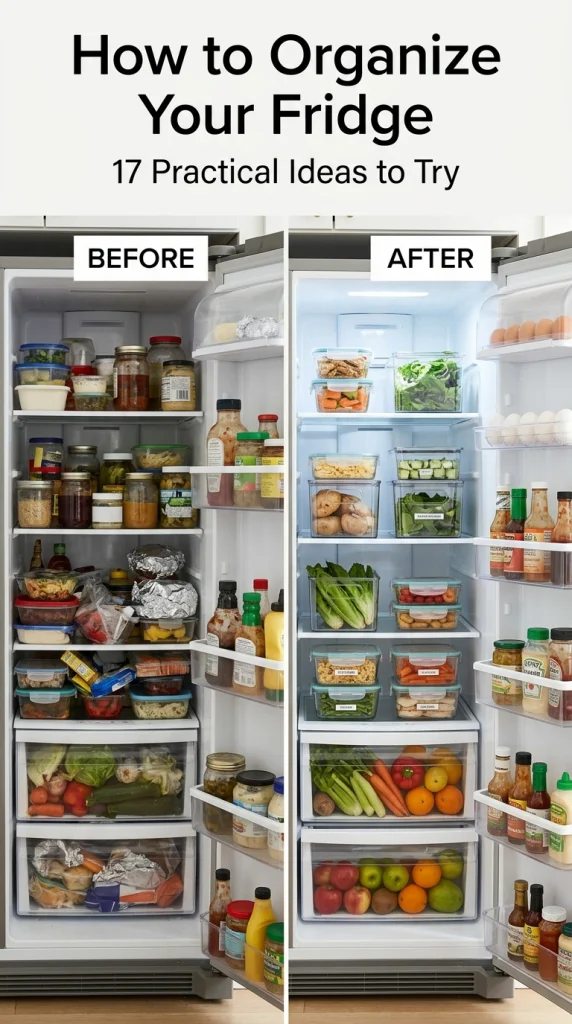
A beautiful refrigerator can become messy again if the system is too complicated.
Keep your organization simple enough that everyone in the household can follow it.
For example, if you create five categories, make sure everyone understands what belongs in each one. If a particular bin constantly becomes messy, reconsider whether the category or container is practical.
The best refrigerator organization system isn’t necessarily the most aesthetic one. It’s the one that makes daily food storage easier.
A Simple Fridge Organization Setup to Try
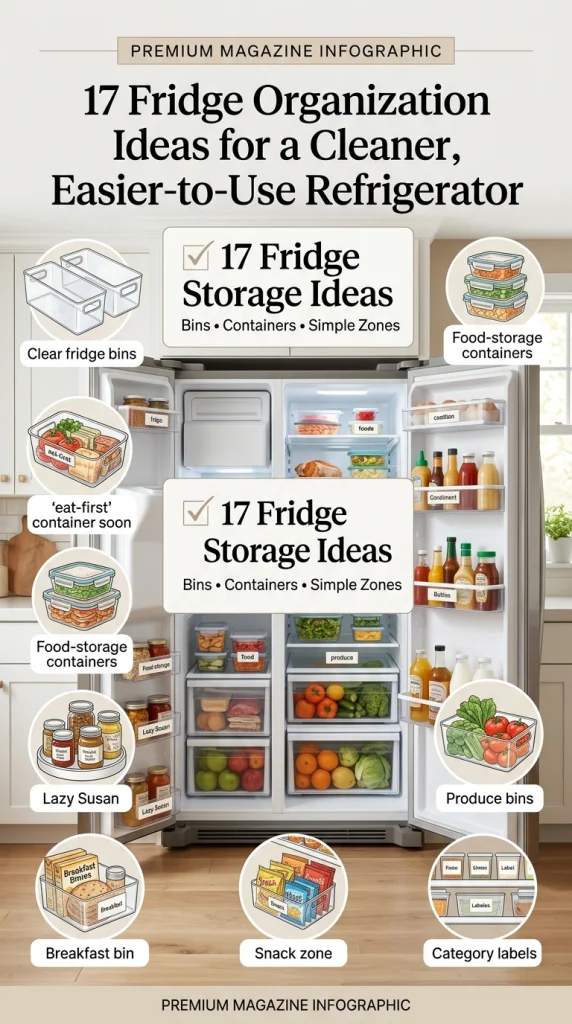
If you’re starting from scratch, you don’t need to buy everything at once.
Start with:
- 3–5 clear refrigerator bins
- A few matching food-storage containers
- One small turntable
- Simple labels
- One dedicated leftovers or eat-first container
Then organize your refrigerator based on the foods your household actually buys.
After using the system for a week or two, you’ll quickly notice which containers are genuinely useful and which ones aren’t.
Frequently Asked Questions
How do I organize a refrigerator with limited space?
Start by removing expired and unwanted food, then group similar items together. Use narrow bins and stackable containers where appropriate, but avoid overcrowding the shelves. Prioritize foods you use frequently and keep them easy to see.
Are fridge bins worth using?
They can be useful for grouping small or similar items and making shelves easier to manage. Clear bins are particularly convenient because their contents are visible.
How can I make my fridge look more aesthetic?
Use a consistent collection of containers, keep labels simple, group foods by category, and avoid overfilling shelves. A little open space can make the refrigerator look cleaner without requiring expensive products.
What should go in refrigerator drawers?
Use the drawers according to your refrigerator’s design and the storage recommendations for the foods you purchase. Keep produce organized rather than mixing everything together, and avoid packing drawers so tightly that items are difficult to see.
How often should I organize my refrigerator?
A quick weekly reset can help prevent clutter from building up. A deeper clean can be done as needed, particularly when there are spills or significant buildup.
How do I stop leftovers from getting forgotten?
Create a visible leftovers or “eat first” section. Store leftovers in clearly labeled containers when useful and place older items where they are easy to see.
Final Thoughts
Good refrigerator organization doesn’t require a luxury kitchen or dozens of storage products. The biggest improvement usually comes from giving everything a logical place and creating a system that’s easy to maintain.
Try a few of these fridge organization ideas at a time. Start with clearing out old food, grouping categories, adding a few useful bins, and creating an eat-first area.
Once your refrigerator has a simple system, everyday tasks like putting groceries away, finding ingredients, and planning meals can become much easier.