
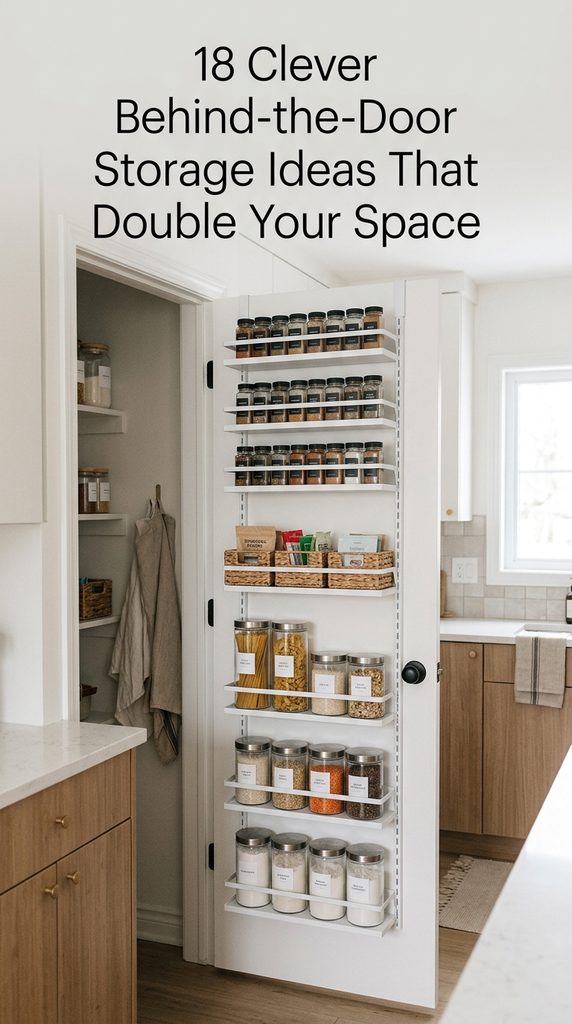
Finding enough room for everyday essentials is an ongoing battle when living in a compact home, apartment, or older house with shallow closets. Floor space fills up fast, shelves get crowded, and suddenly countertops become magnets for clutter.
The most overlooked storage asset in any home is vertical real estate—specifically, the back of your doors.
Standard interior doors measure around 80 inches tall and 30 to 36 inches wide. That offers roughly 16 to 20 square feet of vertical space per door that typically sits empty. With the right hardware, clear bins, and smart layouts, you can transform these blank surfaces into hard-working storage hubs without drilling massive holes or blocking walkways.
Here are 18 practical, tested behind-the-door storage ideas to help you reclaim hidden square footage in every room of your house.
Smart Pantry & Kitchen Door Storage Ideas
Kitchens frequently suffer from shallow cabinets and cramped countertops. Adding functional door storage lets you create an auxiliary pantry without renovating.
1. Multi-Tiered Wire Spice and Can Racks
Mounting a tiered, heavy-duty wire rack directly to a pantry door keeps spices, baking extracts, and small canned goods at eye level.
- How to use it: Group items by category (baking spices on one tier, savory seasonings on another, canned broths below).
- Key benefit: You free up prime pantry shelf depth while preventing small spice jars from getting lost in dark cabinet corners. Look for systems that bolt securely to the door frame rather than swinging freely on top hooks.
2. Over-the-Door Clear Pocket Snack Stations
A clear vinyl or heavy mesh shoe organizer hung over the pantry door is a functional way to organize grab-and-go food.
- How to use it: Dedicate individual rows to packaged snacks: granola bars, dried fruit pouches, snack-sized chips, or popcorn packets.
- Key benefit: Because the pockets are transparent, you can check inventory at a glance before writing your grocery list. It also keeps lunchbox snacks accessible for kids without them tearing through organized baskets on higher shelves.
3. Cutting Board and Baking Sheet Slotted Baskets
Flat, bulky kitchen gear like sheet pans, muffin tins, and large cutting boards take up awkward space inside base cabinets.
- How to use it: Install a narrow wire basket rack on the inside of a lower cabinet door or the main pantry door. Slip cutting boards vertically into the slots.
- Key benefit: Vertical storage keeps items separated so you never have to unstack a towering pile of heavy metal baking trays just to grab one cookie sheet.
Bathroom Door Organizers for Clutter-Free Counters
Bathrooms often lack built-in linen storage, leaving medicine cabinets and vanity drawers overflowing. Using the back of the bathroom door or under-sink cabinet doors provides practical relief.
4. Metal Baskets for Hot Hair Styling Tools
Blow dryers, flat irons, and curling wands are bulky, have tangled cords, and need a heat-safe place to cool down.
- How to use it: Mount heat-resistant steel wire baskets or holsters on the inside of the bathroom door or inside an under-sink cabinet door.
- Key benefit: Storing these daily items off the counter keeps surfaces clean, protects vanity tops from heat damage, and wraps cords neatly out of sight.
5. Multi-Level Hanging Towel Racks
A single wall-mounted towel bar rarely provides enough drying space for a shared bathroom.
- How to use it: Choose a three- or four-tier over-the-door towel bar designed with stepped depth, ensuring proper airflow between damp towels.
- Key benefit: You expand your drying capacity instantly without putting anchors into bathroom drywall or damaging moisture-sensitive wall paint.
6. Pocket Organizers for Daily Toiletries and Skincare
Vanity countertops quickly become cluttered with serums, lotions, cotton pads, and hairbrushes.
- How to use it: Hang a slim, fabric-and-mesh pocket organizer on the bathroom door. Assign rows by morning routine, evening routine, and extra supplies (backup toothpaste, razors, bar soap).
- Key benefit: Vertical compartmentalization keeps small bottles upright, preventing leaks and clearing counter space around the sink.
Bedroom & Closet Behind-the-Door Storage
Closets rarely have adequate hanging and accessory storage. Implementing hidden storage behind interior bedroom doors and wardrobe doors streamlines your morning routine.
7. Canvas Hanging Shoe Shelves with Reinforced Inserts
Floor shoe racks take up valuable closet floor space that could otherwise hold luggage or drawer units.
- How to use it: Swap the floor rack for an over-the-door shoe organizer featuring firm cardboard or plastic shelf inserts that prevent shoes from sagging.
- Key benefit: Holding 12 to 24 pairs of footwear off the floor keeps pairs visible, prevents scuff marks, and leaves your closet floor clear for vacuuming.
8. Full-Length Mirror with Concealed Jewelry Cabinet
A dual-purpose solution is a shallow, lockable jewelry cabinet disguised behind a full-length dressing mirror that hangs directly on the door.
- How to use it: Open the mirrored door to access dedicated necklace hooks, ring rolls, earring slots, and shallow shelves for perfume bottles.
- Key benefit: You get a full-length dressing mirror without sacrificing wall space, and your jewelry stays untangled, dust-free, and organized out of sight.
9. Pegboard and Hook Rails for Handbags, Scarves, and Belts
Accessories tend to end up dumped in bins or hung over regular clothes hangers, which ruins their shape.
- How to use it: Mount an over-the-door multi-hook bar or an ultra-flat wooden pegboard panel to hang purses by their handles, organize belts by their buckles, and loop everyday scarves.
- Key benefit: Accessories retain their structural integrity, stay visible while you plan an outfit, and remain completely hidden when the door stays open during the day.
Entryway & Mudroom Door Hacks
Small entryways, mudrooms, and coat closets must handle constant foot traffic, seasonal outerwear, and daily drop-offs.
10. Heavy-Duty Double-Hook Rails for Outerwear
Small entryways rarely have room for a freestanding coat tree, which tips over when overloaded.
- How to use it: Install an over-the-door rail featuring sturdy double prongs. Dedicate top hooks to coats and jackets, and use lower prongs for dog leashes, umbrella loops, and shopping totes.
- Key benefit: Takes zero square footage away from narrow hallways, handles heavy winter coats safely, and creates a clear drop zone right beside the entrance.
11. Fabric Bins for Seasonal Cold-Weather Gear
Knit beanies, wool scarves, gloves, and ear warmers quickly turn coat closet shelves into messy piles.
- How to use it: Hang a soft multi-tiered fabric cubby or pocket caddy on the inside of the coat closet door. Assign individual cubbies to each family member or group items by type (gloves in one, beanies in another).
- Key benefit: Keeps matching winter accessories together, making it simple to grab matching pairs on the way out the door without digging through bins.
12. Hanging Mail Sorters and Key Racks
Countertops near front doors tend to accumulate junk mail, bills, and loose keys.
- How to use it: Secure a flat, two-tier mail slot with lower key hooks to the inside of your front entryway closet door.
- Key benefit: Gives incoming and outgoing paperwork an immediate home, prevents misplaced keys, and keeps paper clutter hidden away from your entryway.
Utility Room, Laundry, & Cleaning Door Solutions
Laundry rooms and utility closets require heavy-duty organization for irregularly shaped, chemical-heavy cleaning tools and supplies.
13. Broom, Mop, and Dustpan Friction Grippers
Leaning brooms and dust mops into closet corners inevitably leads to them falling over every time you open the door.
- How to use it: Install rubber friction clamps or rolling ball grips on the inside of the utility closet door. Snap handles into place 6 to 12 inches above the bottom edge.
- Key benefit: Keeps mop heads and broom bristles off the floor so they stay clean, dry thoroughly, and don’t bend out of shape over time.
14. Integrated Iron and Ironing Board Door Caddies
Ironing boards are tall, cumbersome, and hard to store cleanly without taking up floor or wall space.
- How to use it: Mount a combined heat-resistant iron basket with dual drop-down hooks directly onto your laundry room door.
- Key benefit: Suspends the T-leg or four-leg ironing board securely against the door while offering a safe upper shelf for your steam iron and spray starch bottles.
15. Deep Wire Baskets for Cleaning Sprays and Refill Bottles
Spray bottles, microfiber cloths, and scrub brushes take up valuable shelf space above washers and dryers.
- How to use it: Use sturdy, deep-sided metal baskets mounted on an over-the-door frame to hold glass cleaner, disinfectants, and replacement sponges.
- Key benefit: Keeps cleaning chemicals elevated and out of reach of young children and pets while freeing up upper cabinets for everyday laundry detergents.
Home Office, Craft, & Nursery Door Storage
Flexible, adaptable storage behind doors helps keep work and creative spaces functional without adding heavy furniture.
16. Metal Pegboard Panels for Craft and Office Supplies
Hobby rooms and small home offices need easy access to diverse, small tools like scissors, tape rolls, thread, and rulers.
- How to use it: Mount an over-door metal pegboard system. Customize it with small hanging buckets, wire hooks, and mini magnetic strips.
- Key benefit: Adapts easily as your supply inventory changes. Items are visible while working, but tucked neatly out of the room’s main sightline.
17. Multi-Tiered Gift Wrap and Ribbon Racks
Wrapping paper tubes are notoriously difficult to store neatly without crushing the rolls.
- How to use it: Attach an over-the-door wrapping organizer featuring tall, open-wire compartments and horizontal dowel rods.
- Key benefit: Keeps paper rolls upright and uncreased, holds ribbons on rotating rods for clean cutting, and reserves upper pockets for scissors, gift tags, and tape.
18. Hanging Nursery Station for Diapers, Wipes, and Lotions
Nursery floor space is best saved for cribs, seating, and play mats, leaving changing table tops tight on space.
- How to use it: Position a multi-pocket soft organizer on the bedroom or closet door adjacent to the changing station. Fill with diapers, backup wipes, diaper cream, and swaddle blankets.
- Key benefit: Enables one-handed access to essential baby care supplies while you keep your other hand securely on your baby on the changing pad.
Essential Hardware & Safety Tips for Door Storage
Before installing over-door organizers, keep these practical points in mind:
- Check Door Clearance: Place a coin on top of your door and close it. If the door sticks, standard over-the-door metal brackets may scrape your door frame. Choose slim bracket designs or screw-in mounts instead.
- Watch Weight Limits: Hollow-core doors (standard in most modern homes) cannot support excessive weight on tiny drywall screws. If surface-mounting, use hollow-door anchors or mount the system with brackets over the door top where the frame bears the load.
- Prevent Sway and Rattling: When doors swing open and shut, hanging organizers can bounce against the wood. Apply small felt pads or adhesive hook-and-loop strips to the bottom corners of your racks to anchor them firmly against the door panel.
Frequently Asked Questions
Will over-the-door organizers damage my door or frame?
Over-the-door organizers can scuff paint or indent weatherstripping if the brackets are too thick or lack protective padding. To avoid damage, place adhesive felt pads under the brackets and confirm your door closes smoothly without forcing the latch.
How much weight can a standard hollow-core door support?
Hollow-core doors have a solid wood frame around their perimeter (usually 1 to 2 inches wide), but the center consists of thin veneer over cardboard honeycomb. Over-the-door brackets distribute weight across the solid top edge and can comfortably support 20 to 30 pounds. If screwing directly into the center panel, always use specialized hollow-core anchors, and limit weight to lighter items like towels, spices, or shoes.
How do I stop over-the-door racks from swinging and making noise?
Attach adhesive hook-and-loop strips (such as Velcro) or double-sided mounting tape to the bottom corners of the rack and press it firmly against the door. This secures the organizer to the surface so it stays completely still when the door opens and closes.
Maximizing a small space comes down to identifying surfaces that already exist and giving them a second job. By utilizing the back of your pantry, closet, bathroom, and utility doors, you clear precious floor space and keep daily essentials neatly arranged and easy to grab. Choose one door, identify what currently clutters your surfaces, and set up a vertical storage system that simplifies your day-to-day routine.