
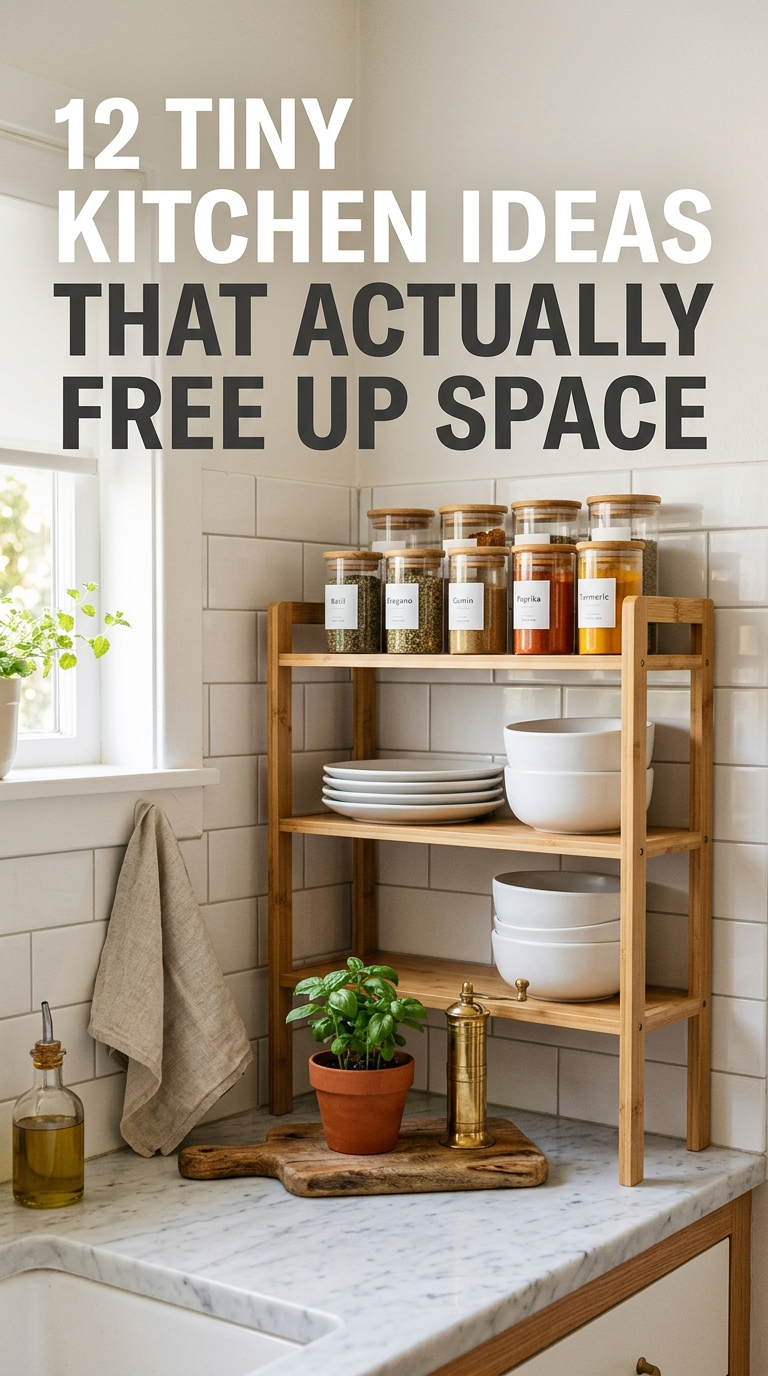
A tiny kitchen counter can become cluttered surprisingly fast. A coffee maker, toaster, cutting board, cooking utensils, spices, and everyday appliances can quickly take over the little workspace you have.
The good news is that you don’t necessarily need more counter space. You need to make better use of the space around and above your counters.
These small kitchen counter organization ideas focus on practical changes that can make a compact kitchen easier to use without requiring a major remodel. Whether you live in a small apartment, studio, rental, or simply have limited counter space, these ideas can help you create a cleaner, more functional kitchen.
1. Move Everyday Items Into a Corner
Kitchen corners are often awkward spaces, but they can become useful storage zones.
Instead of spreading frequently used items across the entire counter, group them together in one corner. A small tray can hold items such as cooking oil, salt, pepper, or a few frequently used spices.
Why it works
A defined zone prevents small bottles and containers from gradually spreading across your workspace.
For example, place a narrow tray beside your stove with cooking oil, salt, and pepper. When you’re preparing food, everything is within reach, but the rest of the counter stays available for chopping and preparation.
Choose a tray that is only slightly larger than the items you actually use. An oversized tray can create another source of clutter.
2. Use a Wall-Mounted Magnetic Knife Strip
A knife block can take up valuable counter space. If you have an empty wall area near your food-preparation zone, consider moving your knives off the counter.
A magnetic knife strip can keep knives visible and accessible while freeing the space previously occupied by a block.
Install it somewhere convenient but safely away from areas where children can easily reach it. Follow the manufacturer’s installation instructions and make sure it is securely attached to the wall.
Small-kitchen tip
If you rent your home and cannot drill into the wall, look for a suitable removable storage solution that is specifically designed for the weight and surface you’re working with.
3. Install an Under-Cabinet Shelf
The area underneath an upper cabinet is often unused vertical space.
A small under-cabinet shelf can create an additional level for lightweight items such as mugs, small jars, tea supplies, or frequently used kitchen accessories.
This is especially useful when your cabinets don’t extend all the way to the counter.
Keep it practical
Don’t turn the shelf into a display area for everything you own. Pick a single category.
For example, you might use it only for coffee supplies or only for everyday mugs. Keeping one category together makes the storage easier to maintain.
4. Replace a Large Knife Block With a Drawer Insert
If you don’t want knives displayed on the wall, a drawer can provide a safer alternative.
A dedicated knife drawer insert keeps knives separated and organized instead of allowing them to move around loosely.
This can also free up the counter space occupied by a traditional knife block.
Before buying one
Measure the inside of your drawer first. Pay attention to both the width and depth, and make sure the drawer can still close properly after the insert is installed.
Good organization starts with measuring the available space rather than buying storage first and trying to make it fit later.
5. Put a Cutting Board Over the Sink
When counter space is extremely limited, the sink itself can temporarily become part of your food-preparation area.
A cutting board designed to fit securely over the sink can create an additional work surface when the sink isn’t being used.
This is particularly useful for chopping vegetables or preparing ingredients.
Important
Use a board that is appropriately sized for your sink and designed to remain stable. Don’t balance an ordinary cutting board precariously across the sink.
When you’re finished preparing food, remove the board so the sink can be cleaned and used normally.
6. Use a Slim Rolling Cart Beside the Counter
A narrow rolling cart can turn an unused gap into useful small kitchen storage.
Look for a cart that fits between your refrigerator and another cabinet, beside an island, or in another narrow space.
You can use different levels for different purposes:
- Baking supplies on one shelf
- Spices and oils on another
- Kitchen towels or cleaning supplies on the bottom
- Extra pantry items on another level
Because the cart can move, you can pull it closer when needed and return it to its storage position afterward.
Measure the gap first
Check the width of the available space, including clearance for doors and drawers. A cart that technically fits may still make the kitchen difficult to use if it blocks something.
7. Hang Cooking Utensils Under a Cabinet
Cooking spoons, spatulas, whisks, and similar tools don’t always need to occupy a container on the counter.
Depending on your cabinet design, an under-cabinet rail or suitable hooks can move these items upward and out of your workspace.
This is a simple form of tiny kitchen organization because it uses vertical space instead of adding another container to the counter.
Keep only the utensils you use regularly in this area. If you have ten spatulas but normally use two, storing all ten within arm’s reach defeats the purpose.
8. Create a Dedicated Coffee or Tea Station
If your counter is crowded with coffee equipment and supplies, give them a defined zone.
Instead of keeping the coffee maker, mugs, coffee, sugar, filters, and accessories scattered around the kitchen, group the supplies together.
A small tray or compact shelf can help contain everything.
Example setup
You could keep:
- Coffee maker
- One container of coffee
- Filters
- Two everyday mugs
- Sugar or sweetener
Extra mugs, backup coffee, and rarely used equipment can stay in cabinets or pantry storage.
The goal isn’t to put more things on the counter. It’s to prevent several separate clutter zones from developing.
9. Store Appliances You Rarely Use Elsewhere
One of the fastest ways to lose counter space is leaving every appliance out permanently.
Think about your toaster oven, blender, stand mixer, air fryer, rice cooker, and other countertop appliances.
If you use something every day, keeping it accessible may make sense. But if you use it once a week or once a month, consider storing it in a cabinet, pantry, closet, or other suitable storage area when you’re finished.
Use a simple rule
Ask yourself:
“Would I use this appliance often enough to justify giving it permanent counter space?”
If the answer is no, create a storage spot for it elsewhere.
This can make a noticeable practical difference without buying any new organizer.
10. Add a Small Sink-Side Organizer
The area around the sink can become cluttered with soap bottles, sponges, brushes, and dishwashing supplies.
Instead of allowing these items to spread across the counter, use a compact organizer that keeps them together.
Choose one with enough room for the items you actually use.
For example, you might keep dish soap, a sponge, and a small brush together while storing extra cleaning products underneath the sink.
Keep the sink area minimal
Avoid turning the organizer into a collection of every cleaning product in the house. Store backups elsewhere and keep only daily-use items nearby.
That makes your kitchen counter storage work harder without requiring a larger footprint.
11. Use a Tiered Organizer for Spices
Spice jars often create visual clutter because several containers are placed one behind another.
A tiered shelf or riser can give each row more visibility.
Instead of moving six jars just to reach the one at the back, you can see more of your collection at once.
Make it easier to maintain
Group spices by how frequently you use them.
Keep everyday spices in the easiest-to-reach position and less frequently used spices somewhere else. If you have duplicates, combine them where appropriate rather than allowing several half-used containers to occupy the same area.
If your counter is already crowded, consider whether your spices could be stored inside a cabinet instead.
12. Use a Small Tray for the Items That Keep Coming Back
Every kitchen has a few things that seem to migrate onto the counter no matter how often you put them away.
Instead of fighting that habit, give those items a defined home.
A small tray can hold things such as:
- Salt and pepper
- Cooking oil
- Frequently used seasonings
- A utensil holder
- Coffee supplies
The tray creates a visual boundary. When you’re cleaning the kitchen, you can quickly wipe the counter around it and return misplaced items to the appropriate zone.
Don’t let the tray become a clutter magnet
The tray should contain a specific group of useful items—not become a place where random objects accumulate.
If something doesn’t belong in that category, it needs another home.
How to Choose the Right Storage for a Tiny Kitchen
Before buying organizers, look at your kitchen from three directions:
Counter space: What is taking up the most room?
Vertical space: Which walls, cabinet undersides, or cabinet interiors are underused?
Hidden space: Could something be stored inside a drawer, cabinet, pantry, or rolling cart instead?
This approach helps you solve the actual problem rather than simply adding more storage products.
For example, if your counter is covered with appliances, buying another countertop organizer probably won’t solve the problem. Moving rarely used appliances into storage will create more usable workspace.
A Simple 15-Minute Small Kitchen Counter Reset
If your kitchen feels overwhelming, you don’t have to reorganize everything at once.
Start by removing everything from one section of the counter.
Then sort the items into four groups:
- Use every day
- Use occasionally
- Belongs somewhere else
- No longer needed
Put everyday items back only if they genuinely benefit from staying accessible.
Move occasional items into appropriate storage. Return misplaced items to their proper rooms or storage areas, and deal with anything you no longer need.
Finally, wipe the empty counter before putting things back.
This simple process can reveal how much of your limited workspace is being used by items that don’t actually need to be there.
Mistakes to Avoid When Organizing a Tiny Kitchen
Buying organizers before measuring
An organizer that is too large can make a small kitchen feel even more crowded.
Measure your drawers, cabinets, gaps, and available wall space first.
Keeping everything on the counter
Easy access doesn’t mean everything needs to remain visible.
Prioritize the items you use frequently and store the rest.
Creating too many categories
You don’t need a separate container for every small group of objects. Too many organizers can create additional visual clutter.
Use simple systems that are easy to maintain.
Ignoring vertical storage
When floor and counter space are limited, walls and cabinet undersides can become valuable storage areas.
Look upward before adding another item to the counter.
Final Thoughts
Good small kitchen counter organization isn’t about making a tiny kitchen look perfect. It’s about making the limited space work better for the way you actually cook and live.
Start with the biggest source of clutter. Move rarely used items into storage, take advantage of vertical space, group frequently used supplies together, and avoid adding organizers that don’t solve a specific problem.
Even one small change—such as moving a knife block, storing an appliance, or creating a dedicated tray zone—can give you a more usable counter and make everyday kitchen tasks easier.
FAQ
How do I organize a very small kitchen counter?
Start by keeping only frequently used items on the counter. Move rarely used appliances into cabinets or other storage, then use vertical solutions such as under-cabinet shelves, wall storage, or hooks where appropriate.
What should I keep on my kitchen counter?
Keep items that you use frequently and that are practical to access, such as an everyday coffee maker or commonly used cooking supplies. Items used occasionally can usually be stored elsewhere.
How can I get more counter space without remodeling?
Use existing vertical and hidden space. Under-cabinet shelves, wall-mounted storage, drawer organizers, rolling carts, and sink-over cutting boards can all help create more usable workspace without changing the countertop itself.
How do I keep a tiny kitchen from getting cluttered?
Give frequently used items specific homes and return them after use. Avoid keeping duplicates and unnecessary appliances on the counter. A short daily reset can also prevent small amounts of clutter from building up.
What is the best way to organize kitchen counters in an apartment?
Focus on renter-friendly and reversible solutions where necessary. Use drawers, cabinets, freestanding carts, trays, and removable storage options instead of making permanent changes if your rental agreement doesn’t allow them.